


ADAS and Road Safety: the Automobile Club d’Italia hosts the second episode of the Autopromotec Dialogues
02/10/2026
ADAS: Continuous Safety Throughout a Vehicle’s Lifespan
Maintenance, calibration, verification, periodic inspections, and data access are at the heart of the discussion promoted by Autopromotec. Companies, associations, and institutions are calling for reliable and harmonized procedures capable of keeping pace with the evolution of the smart car.
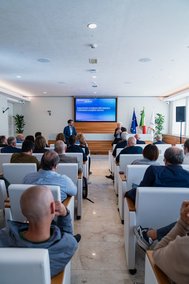
From Rome, October 2, 2026 — The mere presence of ADAS systems in vehicles is not enough, on its own, to guarantee safety: cameras, radar, sensors, and software must remain efficient and properly calibrated throughout the vehicle’s entire lifecycle. This was the central message that emerged in Rome from “Invisible Safety: ADAS, Maintenance, and a Culture of Prevention in the Era of the Smart Car,” an event organized by Autopromotec—The Dialogues—sponsored and hosted at the prestigious headquarters of the Automobile Club d’Italia.
The meeting, introduced by Alessandro Lago, editor-in-chief of Quattroruote, brought together representatives from the Traffic Police and specialists from the automotive equipment industry to address a transformation involving drivers, repair shops, vehicle inspection centers, insurance companies, manufacturers, and institutions.
The Hon. Galeazzo Bignami, Leader of the Fratelli d’Italia Group in the Chamber of Deputies of the Italian Republic, delivered the government’s opening remarks, emphasizing the attention that institutions are giving to the automotive sector.
Automatic emergency braking, lane-keeping assistance, traffic sign recognition, and adaptive cruise control are now an integral part of active safety. ADAS systems, however, assist the driver but do not replace them. The growing trust placed in these systems makes it even more important to verify their efficiency: the risk is not only that a function may not operate correctly, but that the driver may continue to rely on a safety feature whose performance could deteriorate over time.
ADAS systems reduce the overall risk of accidents by 38%
Alessandra Zinno, ACI Director for Road Safety Education, Mobility, and Tourism, highlighted that according to a study by the ACI’s Filippo Caracciolo Foundation, a car over 10 years old is more than twice as likely to be involved in an accident as a newer vehicle. The inclusion of ADAS driver-assistance systems results in a 38% reduction in the overall risk of accidents compared to vehicles without them, and automatic emergency braking, in particular, can reduce accidents by 35% and rear-end collisions by 45%. These figures, however, could be significantly higher with greater driver awareness: this is why ACI is stepping up its training efforts with specific ADAS programs at its Safe Driving Centers in Vallelunga and Lainate, as well as at driving schools in the Ready2Go network.
From Real-World Cases to the Need for More Comprehensive Data
Chief Technical Commissioner Mario Porretto, engineer with the Traffic Police Service, shared insights from the Central Automotive Analytics and Forensics Laboratory. When reconstructing an accident, it is increasingly important to distinguish between actions taken by the driver and those initiated autonomously by the vehicle.
Event Data Recorders now make it possible to capture information regarding the seconds leading up to the collision and, in the most recent systems, to verify the status of automatic braking as well. However, this data does not always allow us to understand the context in which the ADAS made a decision, nor to precisely establish the sequence of actions taken by the system and the driver.
This comparison therefore highlighted the need for more comprehensive and standardized information: broader time windows, adequate sampling frequencies, and data regarding detected objects, distance, relative speed, sensor conditions, and the required vehicle response.
Experience gained from real-world cases also suggests expanding the scenarios used in testing to include less-than-ideal conditions that more closely resemble everyday driving: wet roads, poor visibility, night driving, curves, roadwork, tunnels, and temporary signage. Another key issue concerns overrides—that is, the actions by which the driver interrupts an abnormal automatic intervention and regains control. The methods vary among manufacturers and require more in-depth studies to establish common guidelines.
Sensors that must be kept in good working order, just like brakes and steering
Andrea Lupi, Head of Product Management and Technical Service EMEA at MAHLE, has described ADAS as the driver’s “additional senses.” Cameras, radar, and other sensors monitor the surrounding environment, interpret what is happening, and can intervene in the event of a hazard. To function correctly, however, they must know their exact position and direction.
Even a minimal deviation—caused, for example, by replacing the windshield, a collision, or work on the bumpers, suspension, or steering—can alter how a sensor reads the road. The system might continue to appear active without functioning with the precision intended by the manufacturer. For this reason, calibration cannot be considered a minor task: checking radars and cameras must become a routine part of maintenance, just like inspections of brakes, tires, and steering.
It has been emphasized that technological safety does not end the moment the car leaves the factory. It must be maintained over time through diagnostics, maintenance, proper repairs, and post-repair inspections—especially after work that may alter the vehicle’s alignment or the position of the sensors.
The cost of inspection is an investment in safety
Franco Benati, Equipment Sales Manager at Sipav Srl, a CEMB Company, addressed the economic sustainability of these inspections. Equipment, training, qualified personnel, procedures, and labor time represent real costs for repair shops. However, they must be viewed as a necessary investment to keep the vehicle in the required safe operating condition.
The issue also concerns how these procedures are explained to drivers. A calibration is not merely an additional item on the repair shop’s bill, but the restoration of a system that can alert the driver, correct a trajectory, or activate emergency braking.
The debate also highlighted the gap between existing best practices and their actual implementation. After a windshield replacement, a repair, or an alignment adjustment, checks are not always performed according to uniform standards. Differences in approach among service providers and insurance companies make it necessary to strengthen shared procedures, expertise, and awareness throughout the entire supply chain.
The Challenge of Periodic Inspections
Stefano Delfini, Product Manager for Testing Equipment at NEXION, presented a proposal to include ADAS checks in periodic vehicle inspections. The goal is to dispel the notion that the absence of a warning light automatically means the system is functioning properly: a camera or radar may be misaligned or degraded without producing an error immediately noticeable to the driver.
The methods under consideration include physical inspection of components, diagnostics via the vehicle’s electronic interface, and functional testing of sensors. However, the procedures must be reliable, repeatable, and compatible with the space, time constraints, and operational workflows of Italian vehicle inspection centers. They must also take into account the necessary investments and their economic and pricing sustainability.
AICA has established a working group focused on these aspects, which is exploring scalable technological solutions applicable in the real-world context of vehicle inspection centers, with the goal of balancing technical reliability, metrological accuracy, and speed of execution.
Toward a Harmonized European Framework
Emiliano Pasin, Product Line Manager – PTI Equipment at TEXA, placed the topic within the context of European and international regulatory developments. The proposed update to the Roadworthiness Package, presented by the European Commission on April 24, 2025, aims to adapt periodic inspections to electric, connected, and ADAS-equipped vehicles, including checks on electronic safety systems and software integrity.
However, this proposal is still in the European legislative process: there is not yet a definitive and fully operational regulation governing the inspection of ADAS during vehicle inspections. The European Parliament and the Council will need to finalize the text, while the procedures and implementation standards will require further steps.
The technical feasibility of these inspections is already well established and may include visual inspections, electronic diagnostics, direct sensor testing, and functional checks. The key challenge is to identify inspection levels that are proportionate, independent, and sustainable. The inspection should not replicate the type approval process for new vehicles, but rather verify that a mandatory system is still present, properly calibrated, and capable of performing its intended function.
It will also be essential to ensure standardized and non-discriminatory access to diagnostic data. A vehicle’s self-diagnosis, in fact, cannot be the sole source for evaluating its operation. At the same time, efforts within the UNECE aim to prevent the fragmentation of procedures across countries and to establish shared standards for ADAS, automated systems, and ePTI.
“In a sector that is changing so rapidly, associations have the task of bringing together the expertise of companies, representing their needs, and transforming them into awareness-raising initiatives and concrete proposals. Dialogue with agencies, institutions, and the press is essential for building a culture of prevention and supporting innovation with effective and sustainable regulations,” stated Mauro Severi, president of AICA.
The Rome event confirmed that the safety of smart cars depends not only on the technologies installed but also on the ability to keep them functioning efficiently, test them, and understand their limitations. Prevention, training, and collaboration among industry, repair shops, vehicle inspection centers, insurance companies, and institutions are the necessary conditions for transforming innovation into a real benefit for all road users.
Autopromotec - The Dialogues will continue its series of discussions on the issues that are reshaping mobility and the automotive service sector. This serves as a prelude to Autopromotec 2027, where these transformations will be explored in greater depth in the pavilions of the BolognaFiere Exhibition Center.
Maintenance, calibration, verification, periodic inspections, and data access are at the heart of the discussion promoted by Autopromotec. Companies, associations, and institutions are calling for reliable and harmonized procedures capable of keeping pace with the evolution of the smart car.
From Rome, October 2, 2026 — The mere presence of ADAS systems in vehicles is not enough, on its own, to guarantee safety: cameras, radar, sensors, and software must remain efficient and properly calibrated throughout the vehicle’s entire lifecycle. This was the central message that emerged in Rome from “Invisible Safety: ADAS, Maintenance, and a Culture of Prevention in the Era of the Smart Car,” an event organized by Autopromotec—The Dialogues—sponsored and hosted at the prestigious headquarters of the Automobile Club d’Italia.
The meeting, introduced by Alessandro Lago, editor-in-chief of Quattroruote, brought together representatives from the Traffic Police and specialists from the automotive equipment industry to address a transformation involving drivers, repair shops, vehicle inspection centers, insurance companies, manufacturers, and institutions.
The Hon. Galeazzo Bignami, Leader of the Fratelli d’Italia Group in the Chamber of Deputies of the Italian Republic, delivered the government’s opening remarks, emphasizing the attention that institutions are giving to the automotive sector.
Automatic emergency braking, lane-keeping assistance, traffic sign recognition, and adaptive cruise control are now an integral part of active safety. ADAS systems, however, assist the driver but do not replace them. The growing trust placed in these systems makes it even more important to verify their efficiency: the risk is not only that a function may not operate correctly, but that the driver may continue to rely on a safety feature whose performance could deteriorate over time.
ADAS systems reduce the overall risk of accidents by 38%
Alessandra Zinno, ACI Director for Road Safety Education, Mobility, and Tourism, highlighted that according to a study by the ACI’s Filippo Caracciolo Foundation, a car over 10 years old is more than twice as likely to be involved in an accident as a newer vehicle. The inclusion of ADAS driver-assistance systems results in a 38% reduction in the overall risk of accidents compared to vehicles without them, and automatic emergency braking, in particular, can reduce accidents by 35% and rear-end collisions by 45%. These figures, however, could be significantly higher with greater driver awareness: this is why ACI is stepping up its training efforts with specific ADAS programs at its Safe Driving Centers in Vallelunga and Lainate, as well as at driving schools in the Ready2Go network.
From Real-World Cases to the Need for More Comprehensive Data
Chief Technical Commissioner Mario Porretto, engineer with the Traffic Police Service, shared insights from the Central Automotive Analytics and Forensics Laboratory. When reconstructing an accident, it is increasingly important to distinguish between actions taken by the driver and those initiated autonomously by the vehicle.
Event Data Recorders now make it possible to capture information regarding the seconds leading up to the collision and, in the most recent systems, to verify the status of automatic braking as well. However, this data does not always allow us to understand the context in which the ADAS made a decision, nor to precisely establish the sequence of actions taken by the system and the driver.
This comparison therefore highlighted the need for more comprehensive and standardized information: broader time windows, adequate sampling frequencies, and data regarding detected objects, distance, relative speed, sensor conditions, and the required vehicle response.
Experience gained from real-world cases also suggests expanding the scenarios used in testing to include less-than-ideal conditions that more closely resemble everyday driving: wet roads, poor visibility, night driving, curves, roadwork, tunnels, and temporary signage. Another key issue concerns overrides—that is, the actions by which the driver interrupts an abnormal automatic intervention and regains control. The methods vary among manufacturers and require more in-depth studies to establish common guidelines.
Sensors that must be kept in good working order, just like brakes and steering
Andrea Lupi, Head of Product Management and Technical Service EMEA at MAHLE, has described ADAS as the driver’s “additional senses.” Cameras, radar, and other sensors monitor the surrounding environment, interpret what is happening, and can intervene in the event of a hazard. To function correctly, however, they must know their exact position and direction.
Even a minimal deviation—caused, for example, by replacing the windshield, a collision, or work on the bumpers, suspension, or steering—can alter how a sensor reads the road. The system might continue to appear active without functioning with the precision intended by the manufacturer. For this reason, calibration cannot be considered a minor task: checking radars and cameras must become a routine part of maintenance, just like inspections of brakes, tires, and steering.
It has been emphasized that technological safety does not end the moment the car leaves the factory. It must be maintained over time through diagnostics, maintenance, proper repairs, and post-repair inspections—especially after work that may alter the vehicle’s alignment or the position of the sensors.
The cost of inspection is an investment in safety
Franco Benati, Equipment Sales Manager at Sipav Srl, a CEMB Company, addressed the economic sustainability of these inspections. Equipment, training, qualified personnel, procedures, and labor time represent real costs for repair shops. However, they must be viewed as a necessary investment to keep the vehicle in the required safe operating condition.
The issue also concerns how these procedures are explained to drivers. A calibration is not merely an additional item on the repair shop’s bill, but the restoration of a system that can alert the driver, correct a trajectory, or activate emergency braking.
The debate also highlighted the gap between existing best practices and their actual implementation. After a windshield replacement, a repair, or an alignment adjustment, checks are not always performed according to uniform standards. Differences in approach among service providers and insurance companies make it necessary to strengthen shared procedures, expertise, and awareness throughout the entire supply chain.
The Challenge of Periodic Inspections
Stefano Delfini, Product Manager for Testing Equipment at NEXION, presented a proposal to include ADAS checks in periodic vehicle inspections. The goal is to dispel the notion that the absence of a warning light automatically means the system is functioning properly: a camera or radar may be misaligned or degraded without producing an error immediately noticeable to the driver.
The methods under consideration include physical inspection of components, diagnostics via the vehicle’s electronic interface, and functional testing of sensors. However, the procedures must be reliable, repeatable, and compatible with the space, time constraints, and operational workflows of Italian vehicle inspection centers. They must also take into account the necessary investments and their economic and pricing sustainability.
AICA has established a working group focused on these aspects, which is exploring scalable technological solutions applicable in the real-world context of vehicle inspection centers, with the goal of balancing technical reliability, metrological accuracy, and speed of execution.
Toward a Harmonized European Framework
Emiliano Pasin, Product Line Manager – PTI Equipment at TEXA, placed the topic within the context of European and international regulatory developments. The proposed update to the Roadworthiness Package, presented by the European Commission on April 24, 2025, aims to adapt periodic inspections to electric, connected, and ADAS-equipped vehicles, including checks on electronic safety systems and software integrity.
However, this proposal is still in the European legislative process: there is not yet a definitive and fully operational regulation governing the inspection of ADAS during vehicle inspections. The European Parliament and the Council will need to finalize the text, while the procedures and implementation standards will require further steps.
The technical feasibility of these inspections is already well established and may include visual inspections, electronic diagnostics, direct sensor testing, and functional checks. The key challenge is to identify inspection levels that are proportionate, independent, and sustainable. The inspection should not replicate the type approval process for new vehicles, but rather verify that a mandatory system is still present, properly calibrated, and capable of performing its intended function.
It will also be essential to ensure standardized and non-discriminatory access to diagnostic data. A vehicle’s self-diagnosis, in fact, cannot be the sole source for evaluating its operation. At the same time, efforts within the UNECE aim to prevent the fragmentation of procedures across countries and to establish shared standards for ADAS, automated systems, and ePTI.
“In a sector that is changing so rapidly, associations have the task of bringing together the expertise of companies, representing their needs, and transforming them into awareness-raising initiatives and concrete proposals. Dialogue with agencies, institutions, and the press is essential for building a culture of prevention and supporting innovation with effective and sustainable regulations,” stated Mauro Severi, president of AICA.
The Rome event confirmed that the safety of smart cars depends not only on the technologies installed but also on the ability to keep them functioning efficiently, test them, and understand their limitations. Prevention, training, and collaboration among industry, repair shops, vehicle inspection centers, insurance companies, and institutions are the necessary conditions for transforming innovation into a real benefit for all road users.
Autopromotec - The Dialogues will continue its series of discussions on the issues that are reshaping mobility and the automotive service sector. This serves as a prelude to Autopromotec 2027, where these transformations will be explored in greater depth in the pavilions of the BolognaFiere Exhibition Center.